Selected work focused on simplifying complexity and improving how information is understood and used.
Case Study: Partner Campus Onboarding Process Document
How I redesigned a 5-step onboarding system to improve clarity and usability in sales contexts, increasing comprehension speed and presentation effectiveness.
The Problem
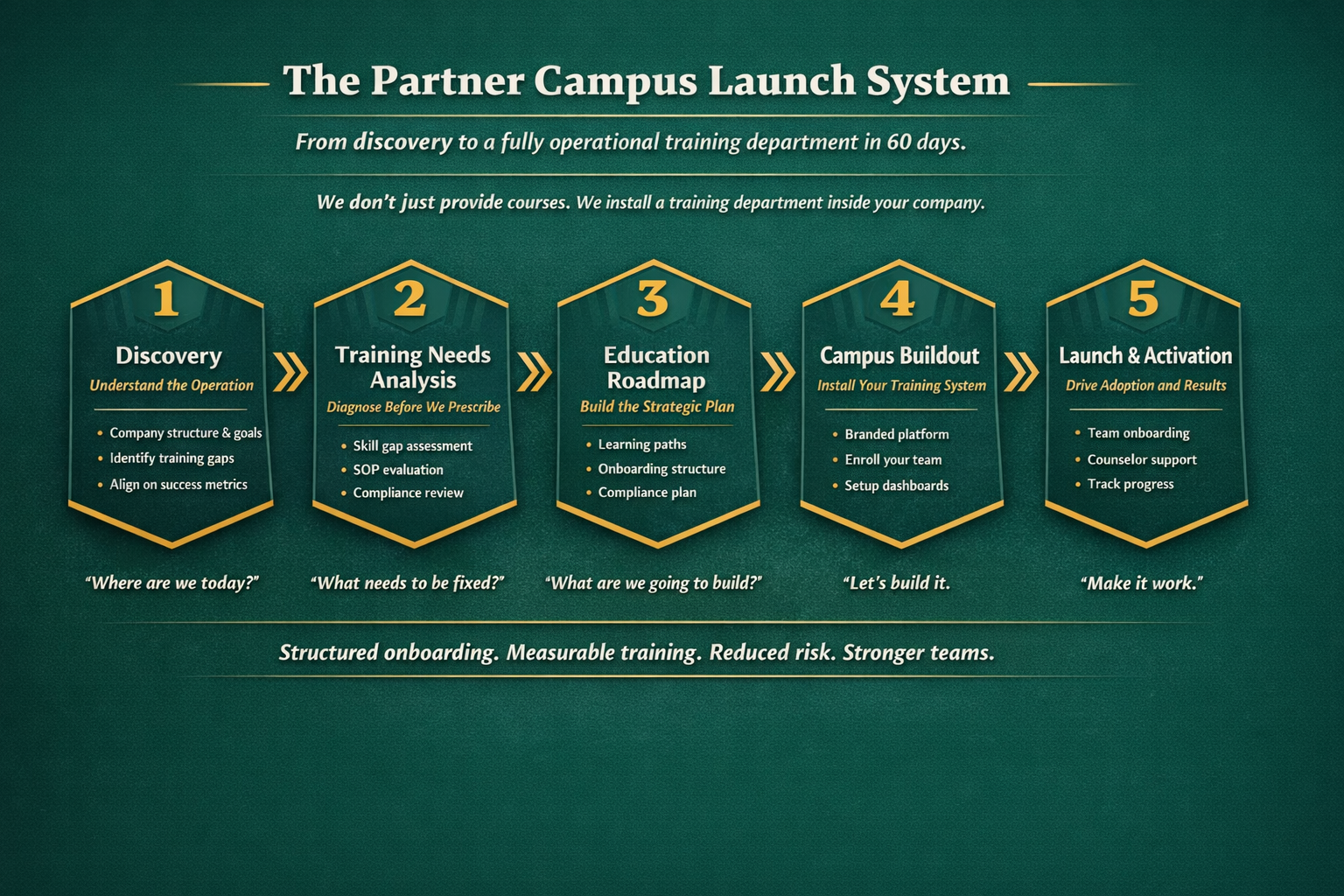
Client provided an onboarding infographic, originally generated within an AI app. The original version was:
Lacking any brand identity
Dense and hard to scan
Visually heavy with low hierarchy
Ineffective in sales conversations
The Request
The client requested:
Updated messaging (which they provided)
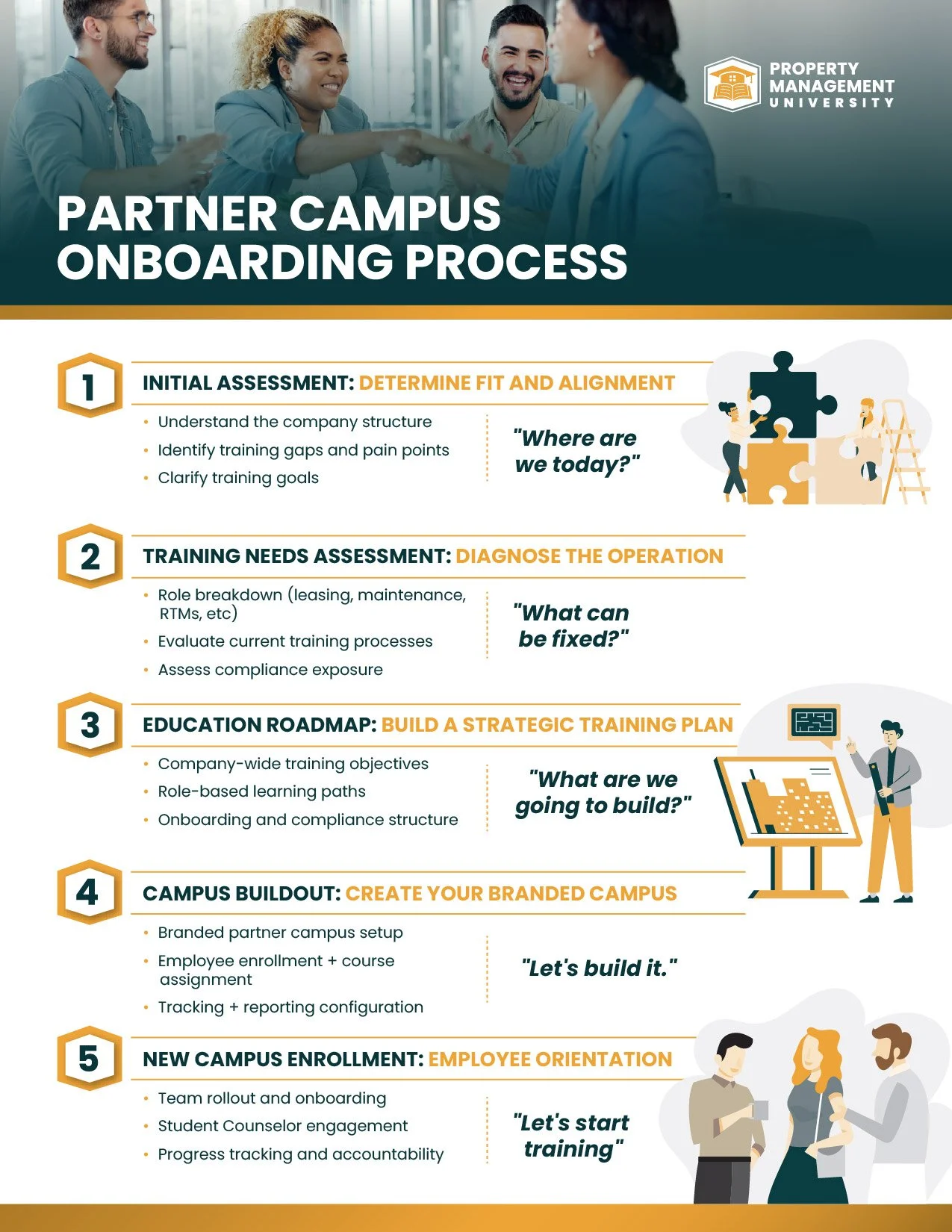
Vertical layout
Banner/header
Design in alignment with company brand guidelines
Digital PDF output, optimized for viewing on web
My Approach
Focused on improving how the system is understood, not just styled:
Improved readability across presentation contexts
Strengthened hierarchy to guide scanning and flow
Reduced cognitive load through spacing and simplification
Modernized layout while staying within brand constraints
Key Design Decisions
Simplified layout to reduce cognitive load
Maintained 5-step structure due to stakeholder constraints
Prioritized readability over visual density
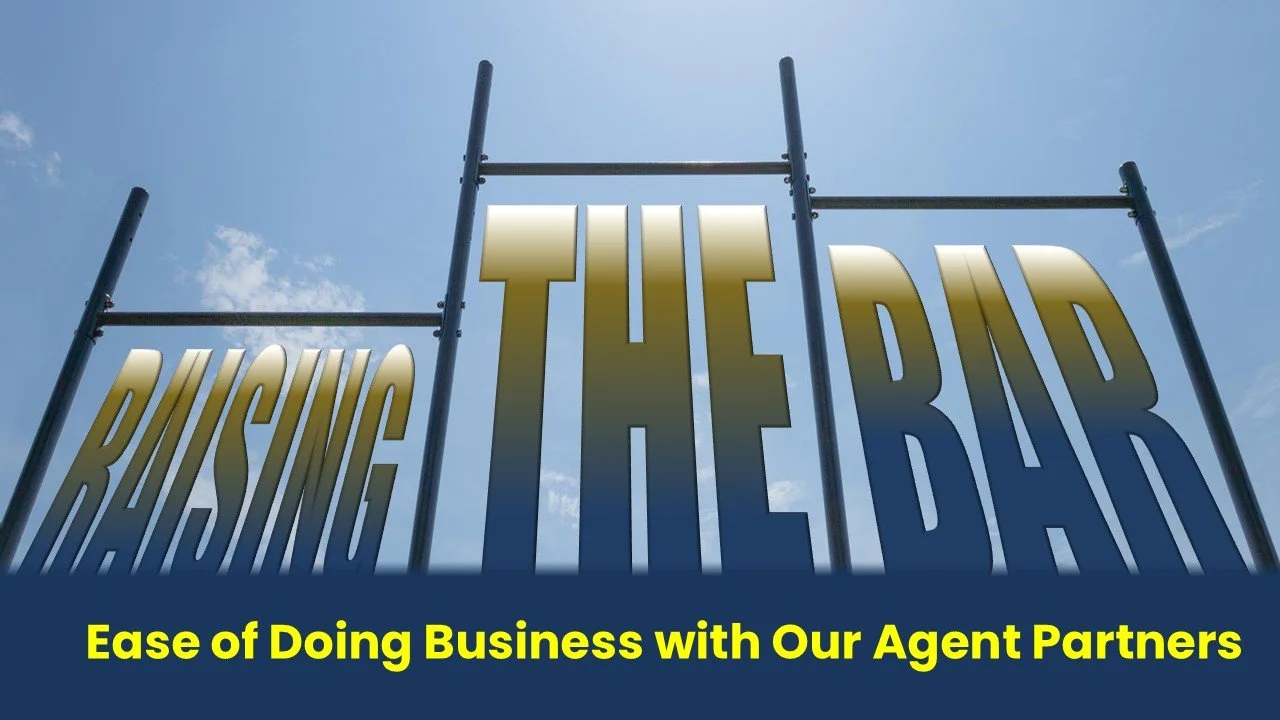
Case Study: Transforming a Training Presentation into a Structured Experience
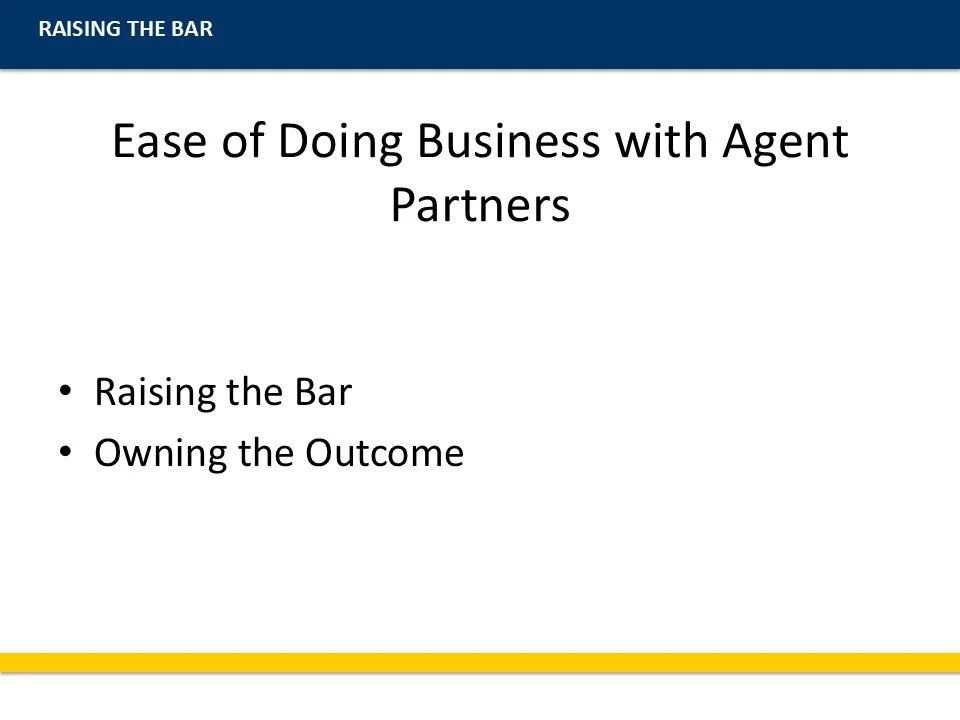
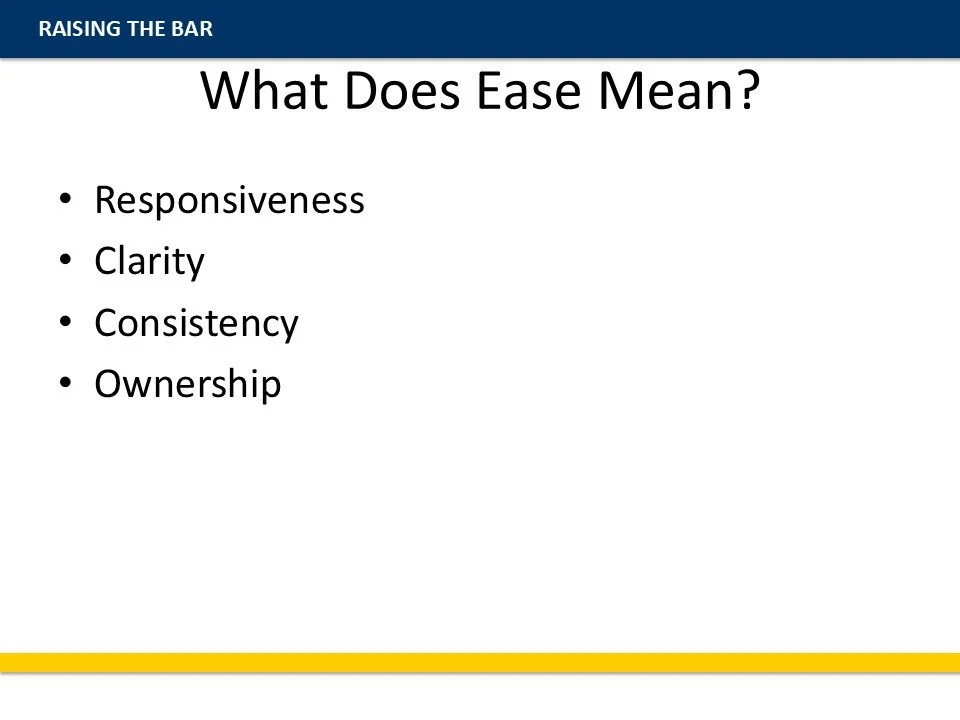
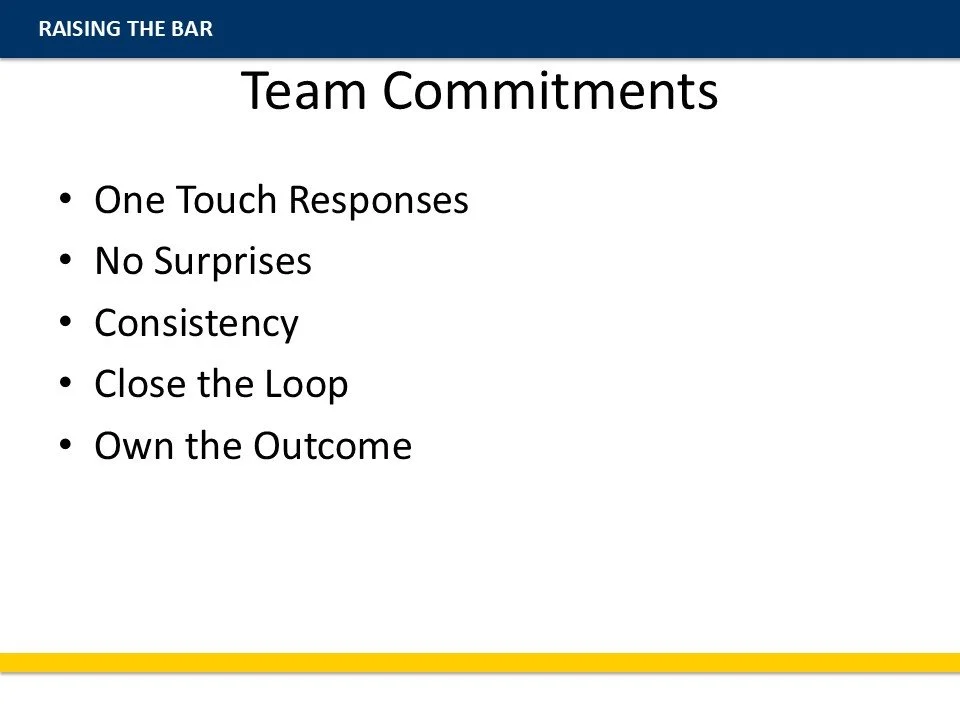
This project focused on redesigning an internal training presentation, “Raising the Bar: Ease of Doing Business with Agent Partners,” to improve clarity, engagement, and consistency. The original version contained strong foundational ideas but lacked structure, narrative flow, and facilitation support.
My role was to evolve the deck into a more intentional, audience-centered experience, one that not only communicated expectations, but actively guided behavior change.
The Problem
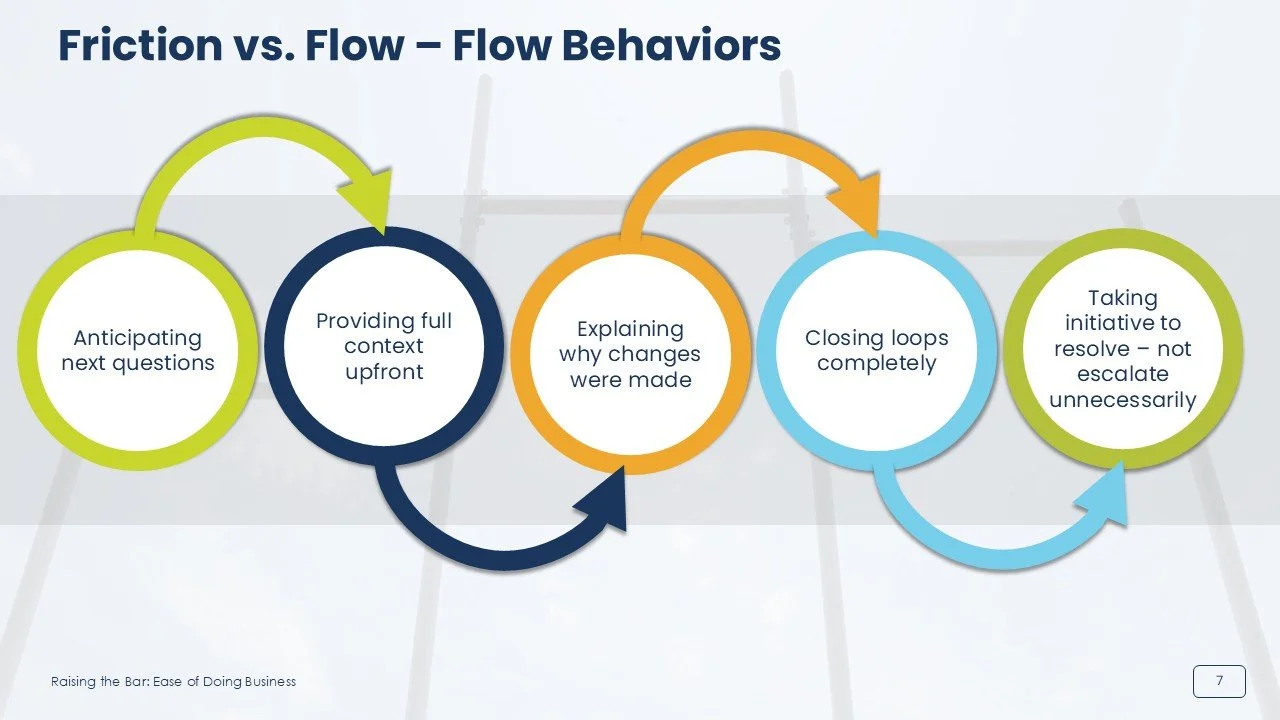
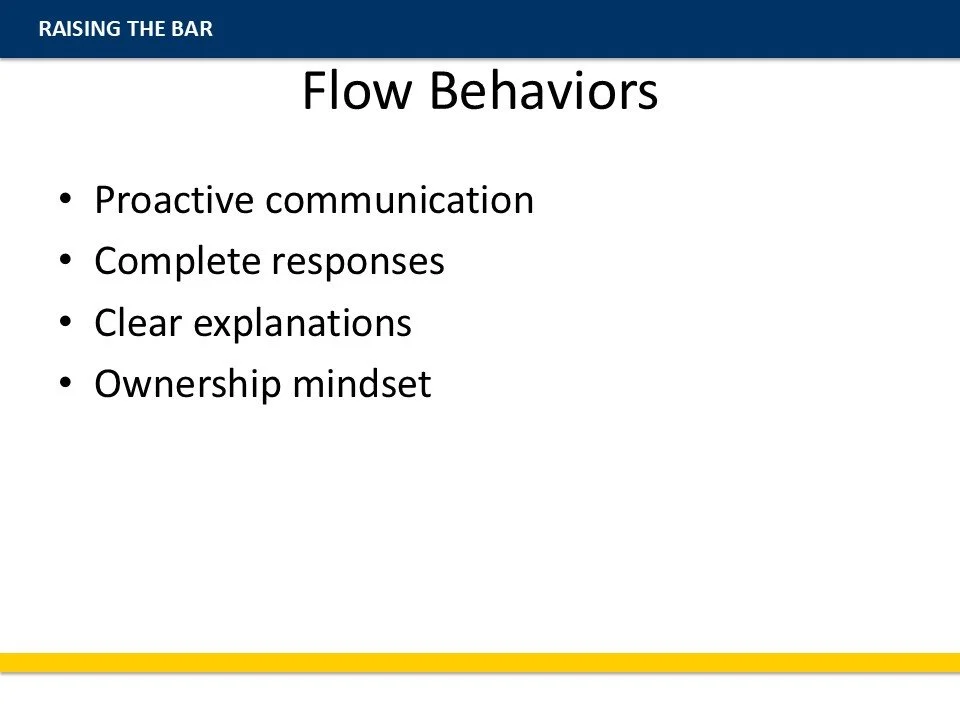
The original presentation successfully introduced key concepts like friction vs. flow and ownership, but several issues limited its effectiveness:
Loose structure — Content existed as standalone slides without a clear narrative arc
Minimal facilitation guidance — Relied heavily on presenter interpretation
Low scannability — Dense or repetitive slides reduced clarity
Limited engagement design — Breakout sessions were under-defined
Inconsistent framing — Concepts weren’t always anchored in real-world application
Ultimately, the content informed—but didn’t fully activate—the audience.
My Approach
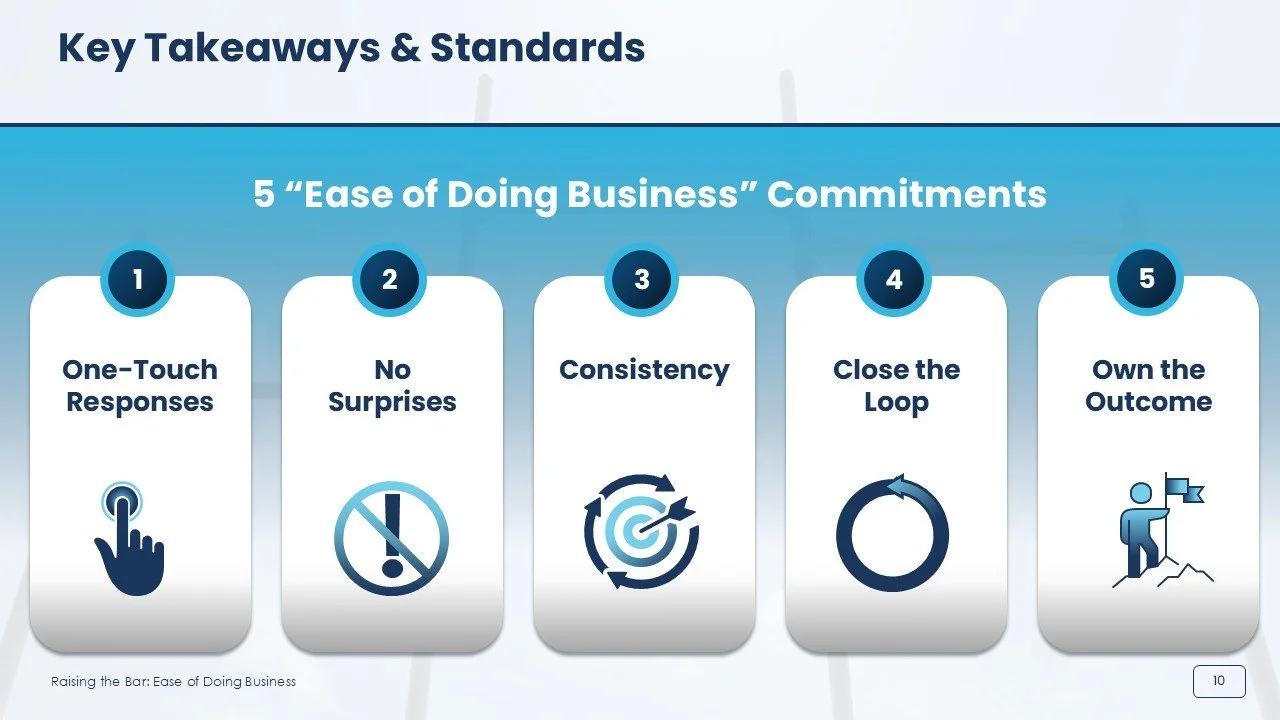
Reframed the narrative into a clear, end-to-end journey (framing → application → commitment)
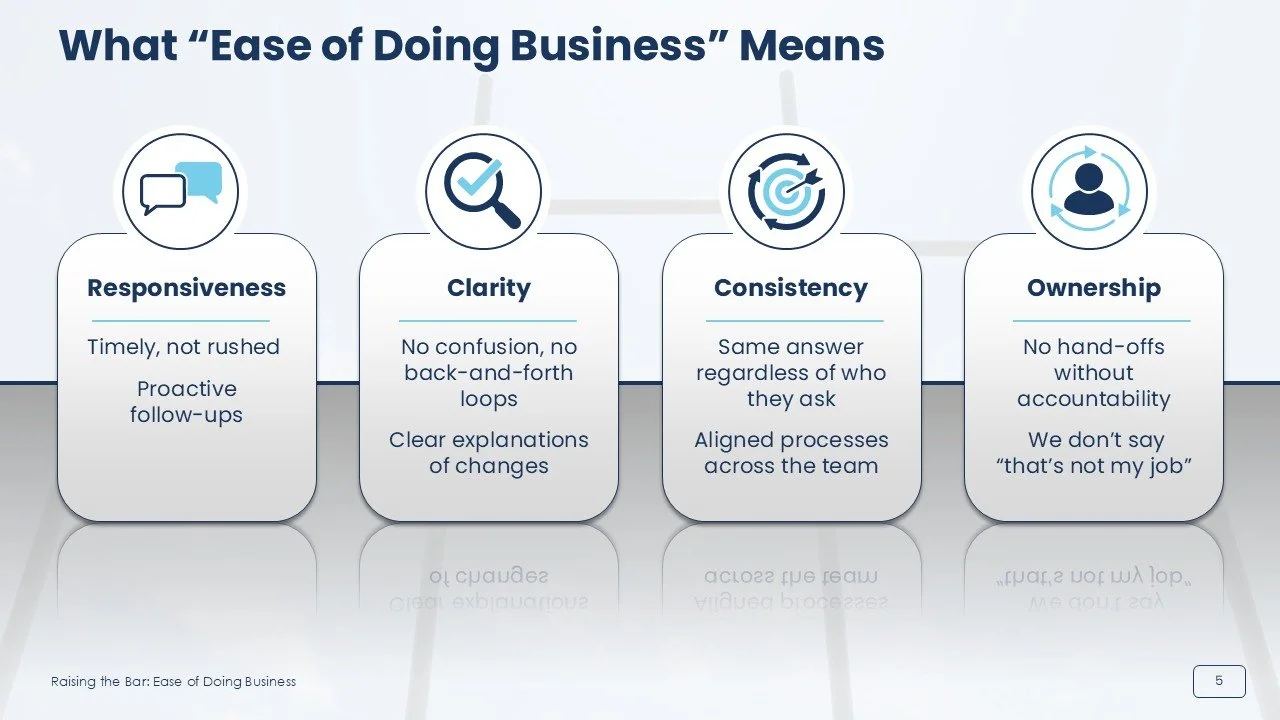
Clarified core concepts by turning abstract ideas into defined, behavior-based pillars
Made content actionable through real-world examples and cause-and-effect framing
Designed for facilitation with structured prompts, guided discussions, and breakout clarity
Elevated engagement by aligning interactive moments to specific learning outcomes
Key Design Decisions
Good presentations communicate ideas. Great presentations shape behavior.
This redesign focused on closing that gap, turning a solid foundation into a structured, engaging experience that helps teams not just understand expectations, but consistently act on them.